InvestEngine is a UK investment platform built around exchange-traded funds (ETFs). Its published proposition combines zero stated account and trading fees with a choice between managing your own ETF portfolio and using a managed portfolio. That can make the platform relevant to investors comparing a focused, low-platform-fee structure, but it does not remove investment costs or risk. [ev_fc75f2d23a21b0de] [ev_c61a9d7e475bd723]
This guide looks at the published account range, costs and practical limits. It is general information, not personal financial or tax advice.
What Is InvestEngine?
InvestEngine offers investment accounts and portfolios centred on ETFs. The provider says investors can either choose their own investments through its DIY service or let its experts manage a portfolio for them. [ev_fc75f2d23a21b0de] [ev_c61a9d7e475bd723]
The appeal of this model is its focus: ETFs can provide exposure to stock markets, bonds and commodities, while the platform says it offers a choice of more than 870 ETFs. [ev_fc75f2d23a21b0de] For someone who wants to build an ETF-based portfolio, that may be a useful starting point. For someone seeking individual shares, investment trusts or other types of investment, the ETF-focused range is an important point to check before applying.
InvestEngine lists a General Account, ISA, Personal Pension (SIPP) and Business Account. Its accounts page also says that tax treatment depends on personal circumstances and may change. [ev_fc75f2d23a21b0de]
InvestEngine Fees and Costs
InvestEngine states that its listed ISA, General Account, Personal Pension (SIPP) and Business Account have zero account fees. It also says its accounts have zero account or trading fees. [ev_c61a9d7e475bd723] [ev_fc75f2d23a21b0de]
That is a platform-pricing statement, not a promise that investing is free. For a DIY portfolio, InvestEngine says there is no InvestEngine fee, but ETF costs and the market spread still apply. [ev_c61a9d7e475bd723] ETF annual charges are set by the funds rather than waived by the platform, and the price at which an ETF can be bought or sold may be affected by its spread.
Managed portfolios use a different structure. InvestEngine states a 0.25% annual InvestEngine fee for its managed service, with ETF costs and market spreads still applying. [ev_c61a9d7e475bd723] When comparing platforms, it is therefore helpful to separate account fees, dealing fees, managed-service fees, underlying ETF charges and trading spreads rather than comparing only a headline “zero fee” claim.
The provider also says it generates interest on uninvested cash, while cash held with InvestEngine does not generate returns for the customer. [ev_c61a9d7e475bd723] If holding a cash balance is part of your plan, check the current terms and consider how that affects your overall comparison.
ETF Range and Portfolio Options
InvestEngine says it offers a choice of 870+ ETFs, describing them as low-cost, diversified and index-tracking exposure to stock markets, bonds and commodities. [ev_fc75f2d23a21b0de] A range of that size can offer building blocks for an ETF portfolio, but availability alone does not mean every fund, market, theme or investment approach will be covered.
The platform offers two broad ways to invest. With DIY investing, you choose investments and manage the portfolio yourself. With a managed portfolio, InvestEngine’s experts manage the portfolio for you. [ev_c61a9d7e475bd723] [ev_fc75f2d23a21b0de] The more suitable route depends on whether you want to make allocation and fund-selection decisions yourself, as well as the different fee structure.
ETFs are investments rather than cash savings products. InvestEngine notes that ETFs have spreads and annual charges, and can involve market-volatility, liquidity, concentration and index-tracking risks. It also says past performance and forecasts are not reliable indicators of future results, and that the value of investments and income can rise or fall. [ev_fc75f2d23a21b0de]
Before opening an account, review the current available investments and the information for any ETF you are considering. In particular, check its charges, exposure, risks and whether it fits the role you intend it to have in a wider portfolio.
Account Options: ISA, SIPP, General and Business
 InvestEngine lists four account types: an ISA, a General Account, a Personal Pension (SIPP) and a Business Account. [ev_c61a9d7e475bd723] The different labels matter because the account wrapper, rather than the ETF alone, may affect how contributions, withdrawals and tax are handled.
An ISA may be relevant to people comparing tax-efficient investing accounts, while a Personal Pension (SIPP) is a pension account. A General Account is the flexible non-ISA account listed by the provider, and a Business Account is intended for companies. These are broad descriptions, not a substitute for checking eligibility or tax consequences in your own circumstances.
InvestEngine says that tax treatment depends on personal circumstances and may change. It also notes that Business Account investment returns are paid gross, but a business may need to pay tax on income or capital growth, and that InvestEngine does not provide tax advice. [ev_fc75f2d23a21b0de]
Verify the current account terms, applicable tax rules, thresholds and allowances before opening an account. If tax treatment is central to your decision, consider obtaining advice from an appropriately qualified tax adviser.
Practical Trade-Offs to Consider
AI-generated generic editorial illustration — not a retailer product photo and does not depict the reviewed product or service. Help readers distinguish platform fees from the remaining investment costs and practical constraints.
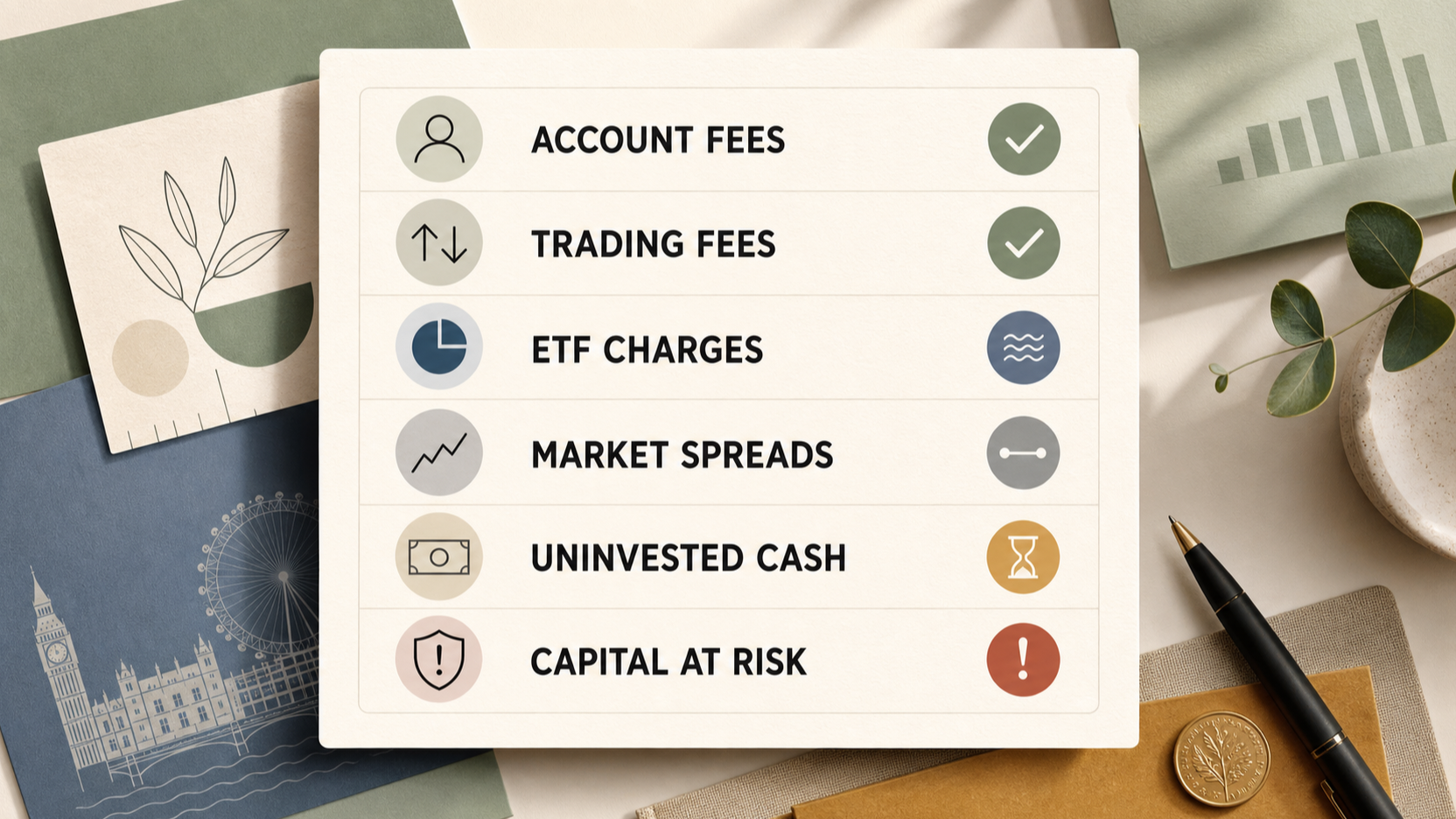 InvestEngine’s ETF focus is a strength for investors who specifically want ETF exposure, but it is also a limit. If you expect to buy investments outside the available ETF range, a broader platform may be worth comparing alongside it. [ev_fc75f2d23a21b0de]
The service model is another trade-off. DIY investing has a stated zero InvestEngine fee, but you make the investment decisions and still face ETF charges and spreads. Managed investing may reduce the amount of portfolio management you do yourself, but InvestEngine states a 0.25% annual managed-service fee in addition to ETF costs and market spreads. [ev_c61a9d7e475bd723]
Uninvested cash is also worth considering. InvestEngine says cash held on the platform does not generate returns, and points users towards AutoInvest or an interest-bearing account as alternatives to consider. [ev_c61a9d7e475bd723]
Finally, a low platform-fee structure does not change the underlying investment risk. InvestEngine states that your capital is at risk and that you may get back less than you originally invested. [ev_c61a9d7e475bd723] [ev_fc75f2d23a21b0de]
Who May Find InvestEngine Suitable?
InvestEngine may be worth researching if you are comparing ETF-focused platforms and want to distinguish platform fees from fund-level costs. Its stated zero account and trading fees may be particularly relevant to cost-conscious DIY ETF investors, provided they also compare ETF annual charges and market spreads. [ev_fc75f2d23a21b0de] [ev_c61a9d7e475bd723]
It may also be relevant if you want a choice between selecting your own ETFs and using a managed portfolio. The managed route should be assessed separately because InvestEngine states a 0.25% annual fee for that service. [ev_c61a9d7e475bd723]
It may be less aligned with a requirement for investment types beyond the available ETF range, or with a plan to keep substantial cash uninvested on the platform. InvestEngine states that uninvested cash does not generate returns. [ev_c61a9d7e475bd723]
A practical pre-opening checklist is to confirm: the account type and eligibility; current platform and managed-service fees; ETF charges and spreads; the current investment range; tax implications; and the risks of the investments you select. Investments can fall in value, and tax rules can change. [ev_fc75f2d23a21b0de]
Frequently Asked Questions
Does InvestEngine charge account or trading fees?
InvestEngine says its accounts have zero account or trading fees. For DIY portfolios, it says ETF costs and market spreads still apply. [ev_fc75f2d23a21b0de] [ev_c61a9d7e475bd723]
What investments are available through InvestEngine?
InvestEngine says it offers a choice of 870+ ETFs and describes them as providing exposure to stock markets, bonds and commodities. Check the current range and individual ETF information before investing. [ev_fc75f2d23a21b0de]
Can I open an ISA or SIPP with InvestEngine?
InvestEngine lists both an ISA and a Personal Pension (SIPP), alongside General and Business Accounts. Eligibility, tax treatment, thresholds and allowances depend on circumstances and can change, so confirm the current terms before applying. [ev_fc75f2d23a21b0de] [ev_c61a9d7e475bd723]
Is InvestEngine DIY investing or managed investing?
It offers both. DIY investors choose their own investments with a stated zero InvestEngine fee, while managed portfolios have a stated 0.25% annual InvestEngine fee; ETF costs and market spreads apply in both cases. [ev_c61a9d7e475bd723]
Sources
Related reading
- Best UK investment platforms: evidence-led comparison of fees, account range, and service models
- Vanguard Investor review: fees, investment range, and practical trade-offs
- How to compare UK investment platforms by account type, dealing pattern, and support
- When regular-investing discounts and platform fee offers provide genuine value
Editorial information: About our editorial team · Read our editorial policy · Read our affiliate disclosure.