Choosing an investment platform is a process of matching an account’s practical use to the terms you can verify today. It is not a recommendation to invest, choose a particular platform, or select a particular investment. Investment values can rise and fall, and a platform comparison cannot decide whether an investment is right for you.
Use the questions below to create a shortlist, collect each provider’s current terms, and record how those terms apply to your own expected balance, holdings and activity.
Start With Your Use Case, Not a Platform Name
AI-generated generic editorial illustration — not a retailer product photo and does not depict the reviewed product or service. Visually reinforce the readiness and due-diligence checks readers should complete before comparing platforms.
 Begin with the job the account needs to do. Write down why you are considering it, when you may need the money, whether you expect to add money regularly, and how often you may buy or sell. Include the service tasks that matter to you, such as moving an existing account, accessing statements, or getting help with an administrative issue.
The FCA says it is important to get immediate finances in order before investing, including dealing with short-term debt and building an emergency cash fund. It also says that needing money soon can mean that you are not ready to invest, because investments can fluctuate in value. These are readiness checks, rather than platform-selection criteria, but they help define whether an investment account fits the intended purpose at all.
A comparison can help you organise information; it cannot determine what you personally should invest in. Take time to understand how a prospective investment works, how it may generate returns, and whether you can tolerate its value moving up or down. FCA: Is it the right investment for you? FCA: 5 smart investment checks
Match the Platform to the Account You Need
Make the account type your first practical filter. List the arrangement you intend to use—for example, an ISA, pension, general investment account, joint account or junior account—then check each shortlisted platform’s current terms for that arrangement. Do not assume that an account label means identical eligibility, administration or transfer processes everywhere.
For each candidate, record the questions you need answered before progressing:
- Is the account arrangement available for your intended use?
- What eligibility, identity-verification and account-opening steps apply?
- What current terms govern contributions, withdrawals, transfers and account ownership?
- Which documents explain the relevant tax treatment, limits and responsibilities?
- Can you understand the investment choices available through that account before using it?
This approach keeps the comparison factual. A platform may have a familiar name or a wide menu, yet still be unsuitable for the account setup you require. Conversely, an account that is available is not automatically an indication that a particular investment is appropriate. The FCA encourages investors to do their homework and understand what they are investing in, rather than treating access alone as a reason to proceed. FCA: Is it the right investment for you?
Compare Dealing Costs Against Your Expected Activity
Next, describe how you expect to use the account. An investor making occasional fund purchases, someone contributing regularly, an ETF investor and a person trading shares more frequently may trigger different costs and need different account mechanics. The point is not to label one pattern as better; it is to test the platform’s published terms against your own likely pattern.
For every platform, note your expected dealing frequency, approximate trade size, whether you need a regular-investment facility, and whether fractional shares, particular order types or settlement information are relevant to you. Also check how easily you could sell an investment if your circumstances changed. The FCA includes ease of selling among the things an investor should be clear about before investing.
Keep assumptions visible. A low dealing charge may matter more if you expect many transactions; a feature designed for regular contributions may matter more if you plan to use it. If you do not expect to use a feature, avoid giving it an artificial value in your comparison. The FCA also cautions that investments can fluctuate and that relying on near-term returns can leave an investor exposed to losses. FCA: 5 smart investment checks
Calculate the Total Cost, Including the Charges You May Actually Trigger
AI-generated generic editorial illustration — not a retailer product photo and does not depict the reviewed product or service. Make the total-cost concept concrete without implying that any provider is best or using product imagery.
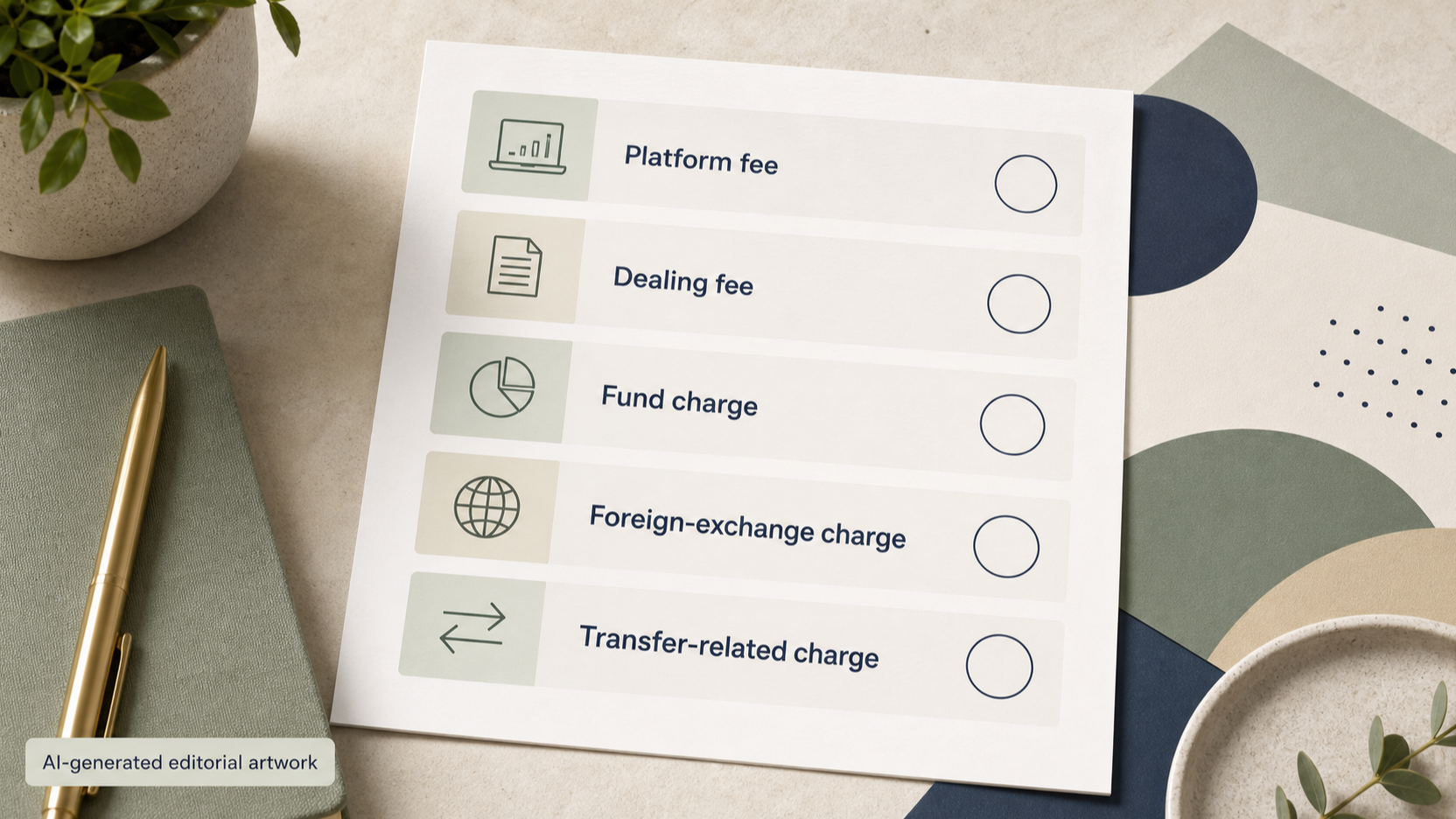 Do not compare only a headline platform fee. Build a worksheet for each finalist using the same assumptions: your likely account balance, the investments you expect to hold, expected transactions, and any circumstances in which you may move money or holdings. The FCA notes that platform fees, management fees and other costs can reduce returns over time.
Your worksheet can contain separate lines for:
- platform or account fees;
- dealing fees;
- charges associated with the investment itself;
- foreign-exchange charges, where relevant;
- telephone-dealing charges, where relevant; and
- transfer-related charges, where relevant.
Then mark each line as “expected”, “possible” or “not relevant to my current plan”. This prevents an advertised price from standing in for the cost you may actually incur. If a charge is unclear, leave it unresolved and obtain the current terms or clarification before treating the platform as comparable.
Costs are only one part of the decision. A lower apparent cost does not remove the need to understand the investment, its risks, access to your money and the other operational terms that matter to you. FCA: 5 smart investment checks
Check Investment Access and Day-to-Day Account Features
After the account and cost filters, check whether each platform supports the investments and routine tasks you genuinely expect to use. Create a short list of practical requirements: the holdings you intend to research, recurring-investment options, cash handling, statements, corporate-action communications and the information you need to monitor the account.
A broad investment range is not evidence that a particular investment suits your goals. The FCA says investors should understand how an investment works and how it may generate returns, including whether returns may come from capital appreciation or regular payments. Use a platform’s tools and documents to help you investigate, but do not substitute availability or a polished interface for understanding.
For each shortlisted platform, record whether the required feature is available, where the current terms explain it, and whether it is relevant to your own workflow. If it is not relevant, do not allow it to outweigh a missing requirement elsewhere. FCA: Is it the right investment for you? FCA: 5 smart investment checks
Assess Service, Transfers and Operational Support
A platform comparison should include the experience of operating the account, not only its investment menu and listed charges. Before deciding, check the current process for onboarding, identity verification, deposits, withdrawals, statements, tax documents, transfers, complaints and available service channels.
Write down what you would need to do in a routine month and in a less routine situation, such as asking a question, withdrawing cash or moving an account. Check the relevant published terms rather than relying on an assumption based on a platform’s marketing. If you may need access to your money soon, treat that as a broader readiness issue as well as an operational one: the FCA notes that investments fluctuate and short-term reliance on returns can expose investors to losses.
For some people, a transfer process or service channel may be more important than a small price difference. That is a personal operational requirement, not a ranking of providers. Keep it as a documented criterion in the same comparison sheet as your cost assumptions. FCA: 5 smart investment checks
Use a Consistent Shortlist and Decision Checklist
Apply the same sequence to every eligible platform. First, remove options that do not offer the account arrangement you require. Second, collect the current terms and charge information. Third, map those charges to your expected balance, holdings and dealing pattern. Fourth, check investment access and the operational processes you expect to use. Finally, retain the notes and source documents that informed your decision.
Before opening or transferring an account, revisit four core questions: do you need the money soon; do you have an emergency fund for unexpected expenses; do you understand how the investments work; and are you comfortable with the fees and with the possibility that values fluctuate? The FCA says investors should not use emergency cash to invest and should take time to understand what their money is going into.
A recorded checklist will not make an uncertain outcome certain, but it can show which decision rests on current terms and which assumption still needs checking. If a key point is unresolved, pause the comparison until you can verify it. FCA: Is it the right investment for you? FCA: 5 smart investment checks
Frequently Asked Questions
Is the cheapest investment platform automatically the best choice?
No. A headline price may not include every charge that your own balance, investments and activity could trigger. The FCA notes that platform fees, management fees and other costs can reduce returns over time. Compare the costs that are relevant to your scenario alongside account availability, access, understanding and operational requirements. FCA: 5 smart investment checks
Should I choose a platform before deciding which account type I need?
It is usually more useful to establish the intended account arrangement first, then remove platforms that cannot meet that practical requirement. Availability does not establish that an investment is suitable, so continue to check that you understand any investment you are considering. FCA: Is it the right investment for you?
What charges should I check beyond the platform’s headline fee?
Use a scenario-based worksheet. Consider platform or account fees, dealing fees, investment-related charges, foreign-exchange charges, telephone-dealing charges and transfer-related charges where relevant, then confirm the current terms. The FCA specifically highlights platform fees, management fees and other costs as matters to understand before investing. FCA: 5 smart investment checks
How important is customer support when comparing investment platforms?
Its importance depends on your own operating needs. Check how you would complete verification, deposits, withdrawals, transfers, document requests and complaints, then record whether the available service routes meet those needs. A comparison should reflect the tasks you expect to perform, rather than assume that one service model fits everyone.
[Use the platform comparison checklist]
Related reading
- Best UK investment platforms: compare fees, account range and service models
- AJ Bell Review: Fees, Account Options, Strengths, Limitations and Alternatives
- InvestEngine Review: Fees, ETF Range and Practical Trade-Offs
- How Investment Platform Fees Work Across Funds, Shares, ETFs and Foreign Exchange
Editorial information: About our editorial team · Read our editorial policy · Read our affiliate disclosure.