Choosing a UK self-directed investment platform is less about finding a universal winner and more about matching current charges, account availability and service to the way you expect to invest. This guide is a comparison framework for people making their own decisions, not personal investment advice. [ev_bb8195964122f5c8] [ev_bd857834e02143e7] [ev_f8dc2dd9affd30c3]
Verdict: choose the platform model before the brand
Start with the platform model, then narrow down individual providers. A low-cost, app-led service may suit someone who wants a straightforward way to hold a limited range of investments. A broader platform may matter more if you need particular funds, shares, trusts or account types. A service-led option may appeal if tools and support are central to how you will manage the account.
There is no one-size-fits-all platform choice. MoneyWeek notes that platforms allow investors to buy, sell and hold investments, while Which? assesses providers using customer, fees and asset scores rather than a single measure. That is a useful reminder that suitability can turn on your intended holding size, activity, preferred investments and desired service model. [ev_f8dc2dd9affd30c3] [ev_bd857834e02143e7]
Before opening or moving an account, check whether investing itself fits your circumstances and goals. [ev_bb8195964122f5c8]
What UK self-directed investment platforms do
A self-directed investment platform is a service that lets you buy, sell and hold investments yourself. These services are often described as investment platforms or fund supermarkets. They can provide a direct route to managing a stocks and shares ISA and other investment arrangements without using an adviser to make the investment choices for you. [ev_f8dc2dd9affd30c3]
This guide compares three practical dimensions: published charges, available accounts and investments, and the service model. That means looking beyond a headline price. A platform can be inexpensive for one use but less suitable if it does not offer the account, investments, trading experience or support you expect to need.
The comparison is designed to help you ask consistent questions of each provider when exploring self-directed investing. [ev_f8dc2dd9affd30c3]
Start with investing readiness, not a platform ranking
AI-generated generic editorial illustration — not a retailer product photo and does not depict the reviewed product or service. Give readers a neutral visual framework for choosing a platform only after checking investing readiness and long-term goals.
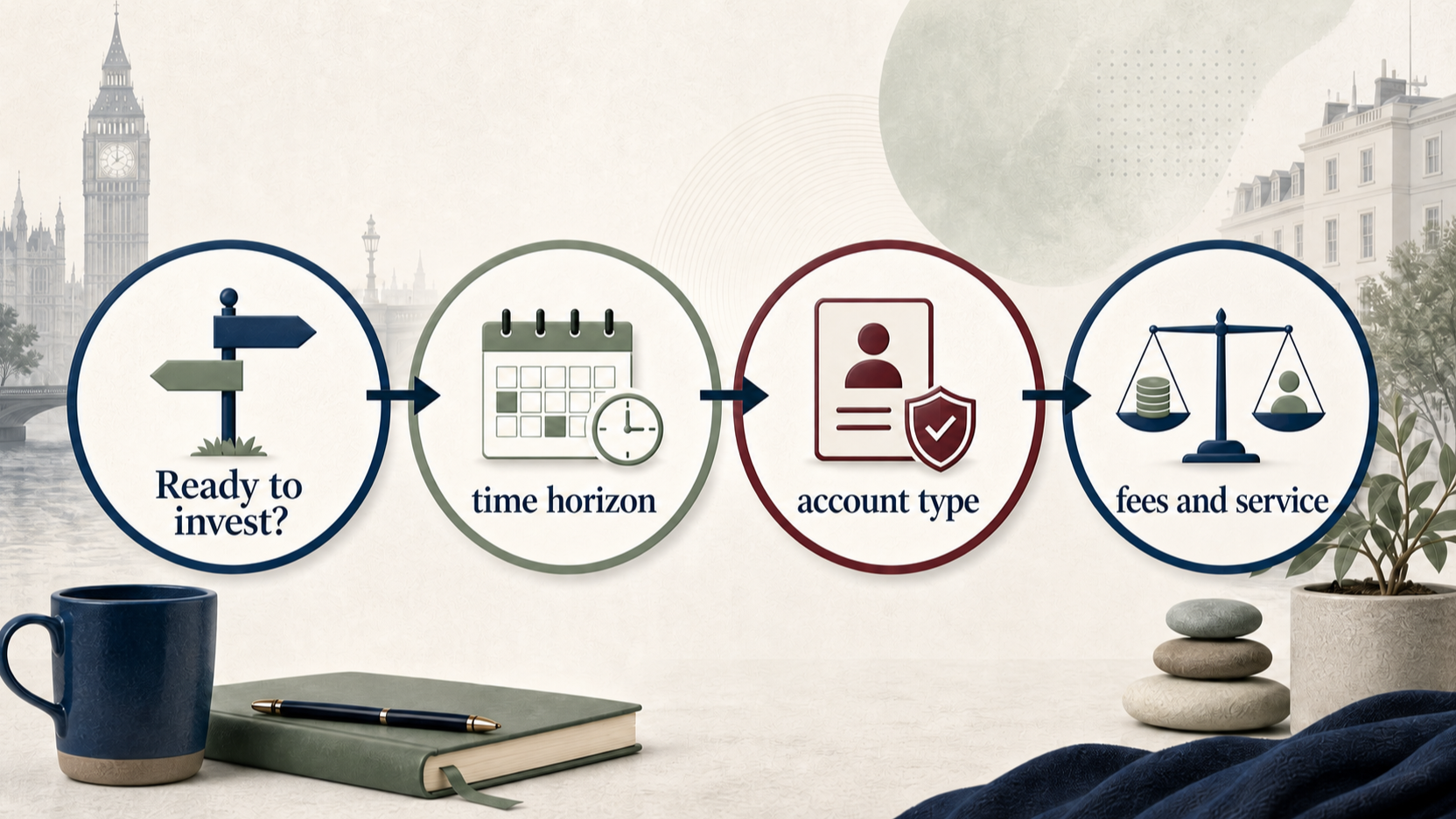
Platform comparisons come after basic investing readiness. The FCA says that people considering investing should first get immediate finances in order, including prioritising short-term debt, building an emergency cash fund and considering workplace-pension contributions. It also says not to use emergency cash for investing and never to use a credit card to buy an investment. [ev_bb8195964122f5c8]
Time horizon matters too. The FCA says that, for a fairly short timeframe—perhaps up to three years—a savings account may be worth considering instead. That does not make savings the right answer for every person; it shows why a platform ranking alone cannot establish whether a long-term investment account matches the job you want your money to do. [ev_bb8195964122f5c8]
Use this as a boundary rather than a personal recommendation: if money may be needed soon, is emergency cash, or would be funded by short-term borrowing, resolve that question before comparing platform features. Then assess a platform against a longer-term objective, your tolerance for managing investments yourself and the account you actually intend to use. [ev_bb8195964122f5c8]
Strengths to match with your investing style
Different platform models emphasise different strengths. A low-cost, app-led model may be attractive when keeping published charges simple is the main priority. Which? includes a fees score in its assessment and says a Recommended Provider cannot be among the most expensive quarter of platforms for a particular investment size; this illustrates why cost should be tested at a relevant portfolio value rather than treated as an abstract label. [ev_bd857834e02143e7]
A broader-investment-range model may be more useful when your intended holdings include a wider mix of funds, shares or investment trusts. Which? separately publishes an asset score, while MoneyWeek highlights platforms’ role in holding funds, stocks and trusts. Availability therefore deserves its own check instead of being assumed from a provider’s overall reputation. [ev_bd857834e02143e7] [ev_f8dc2dd9affd30c3]
A research-led or service-led model may be worth considering if the tools, account-management experience or customer support are important to you. Which? gathers user views and includes a customer score alongside fee and asset measures. That evidence supports treating service as one comparison category—not as proof that a higher-service option will be better for every investor. [ev_bd857834e02143e7]
Limitations and fee traps to check
A low headline charge is not a complete comparison. Which? explicitly assesses platform costs for particular investment sizes, so the price picture can change when the size of the holding changes. Compare providers using your likely account balance rather than a generic example that may not resemble your situation. [ev_bd857834e02143e7]
Read each provider’s current published pricing closely. Check the ongoing account charge, the cost of dealing where relevant, and any charges connected with the investments, services or account actions you expect to use. If you may hold overseas investments or use optional features, include those in the questions you ask rather than assuming they are covered by the headline figure.
Also check account eligibility and transfer terms directly before opening or moving an account. Platform features, offers and charges can change; MoneyWeek notes that some services may offer transfer incentives, but an incentive should not replace checking the underlying terms and the fit with your intended use. [ev_f8dc2dd9affd30c3]
A useful discipline is to compare each candidate on the same date, using the same holding value, expected activity and intended account type. That reduces the risk of comparing a promotional headline from one provider with a different type of cost from another. [ev_bd857834e02143e7]
Compare fees, account range and service on the same basis
AI-generated generic editorial illustration — not a retailer product photo and does not depict the reviewed product or service. Make the repeatable comparison criteria easy to scan while preserving the guide's non-advisory, no-one-size-fits-all framing.
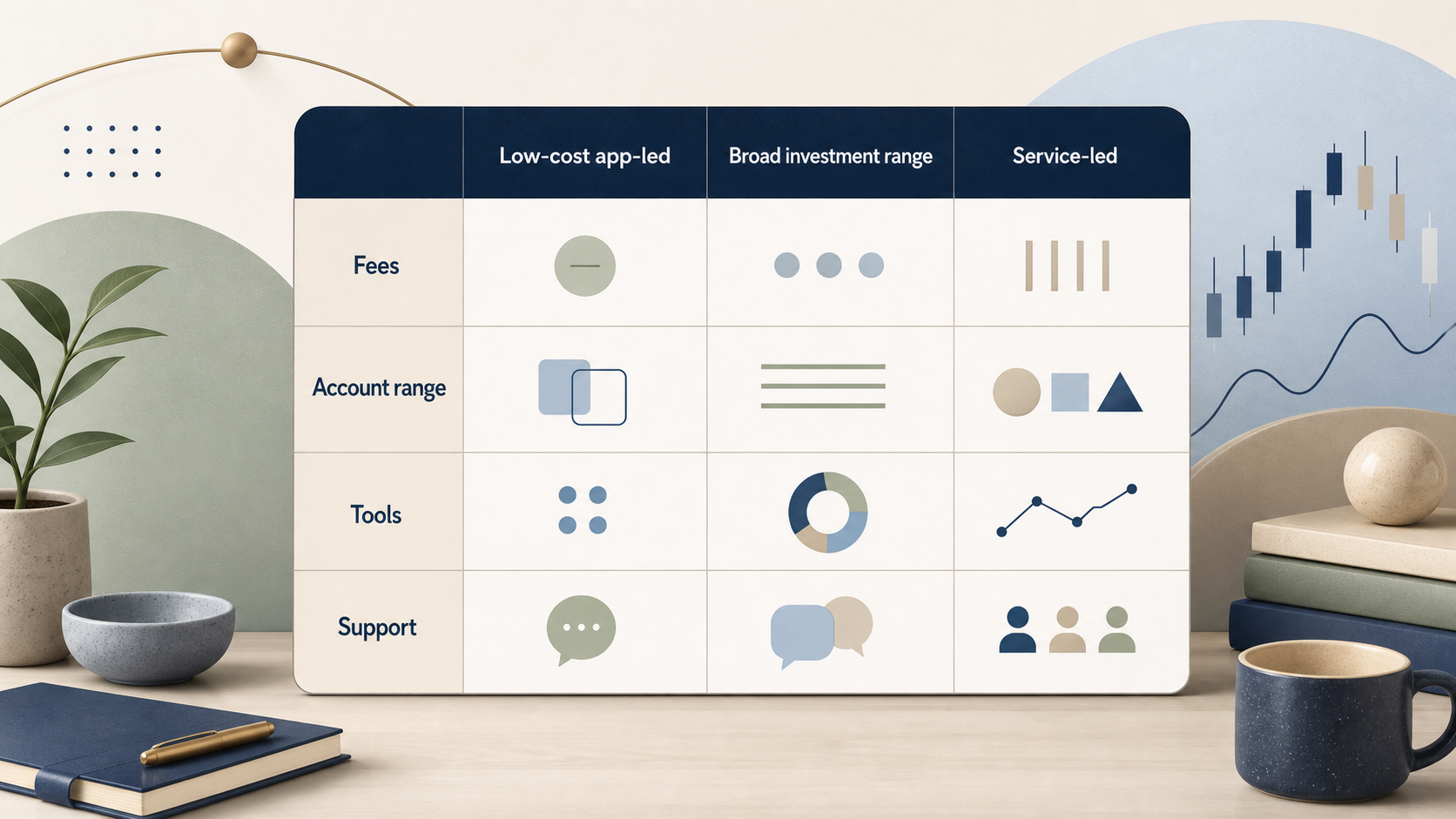
Use one comparison sheet for every platform. First, record the account you need—for example, an ISA or pension arrangement—and confirm that it is currently available. Next, list the investments you expect to use and verify that they can be held on the platform. MoneyWeek identifies funds, stocks and trusts as investments platforms can let users buy, sell and hold, but the range is not necessarily identical across providers. [ev_f8dc2dd9affd30c3]
Then compare published charges on a like-for-like basis. Enter the same expected holding size and the same estimated activity for each option. Which?’s methodology distinguishes fees from asset range and customer experience, which is a sensible structure for your own review: cost, what is available, and how the service works should be assessed separately before being considered together. [ev_bd857834e02143e7]
Finally, note the tools and support you are likely to use. This may include the way you place or monitor trades, how you access account information, and the customer-service route available if something goes wrong. Do not turn a high score or a feature list into a universal recommendation. Instead, use it to identify what needs direct verification with the provider at the point of decision. [ev_bd857834e02143e7]
Shortlist: platform models for common UK investor needs
Organise a shortlist by intended use, not by a blanket “best” label.
Low ongoing-cost focus: begin with platforms whose published charges look competitive at your expected holding size, then check the investment range and account availability. Which? uses fees as one part of its methodology and applies its cost threshold at particular investment sizes. [ev_bd857834e02143e7]
Wider investment-choice focus: prioritise confirming the available funds, shares and trusts. Which? treats asset range as a distinct measure, and MoneyWeek describes platforms as places to buy, sell and hold these types of investment. [ev_bd857834e02143e7] [ev_f8dc2dd9affd30c3]
More active dealing focus: compare the full published charging structure and the dealing tools you expect to use. A platform that looks inexpensive for a long-term holder may require a different assessment for someone expecting more account activity. [ev_bd857834e02143e7]
ISA-focused use: confirm that the relevant ISA is available and that the platform’s current terms work for the investments and service you want. The growing use of platforms for stocks and shares ISAs does not mean every provider offers the same account range. [ev_f8dc2dd9affd30c3]
More guided service focus: give customer support and usability their own place in the comparison. Which?’s customer score is evidence that users’ experience can be assessed separately from price and asset range. [ev_bd857834e02143e7]
The final shortlist should be conditional: retain only the models that meet your own stated requirements, then verify current provider terms before acting.
Alternatives to a self-directed investment platform
A general self-directed platform is not always the most suitable route. If the money may be needed over a relatively short period—perhaps up to three years—the FCA says a savings account could be considered. [ev_bb8195964122f5c8]
If retirement saving is the main objective, consider whether increasing workplace-pension saving is the question to examine before opening another investment account. The FCA includes workplace pensions among the areas to consider while getting immediate finances in order. [ev_bb8195964122f5c8]
Professional financial advice is another route for people who do not want to make all investment choices themselves. MoneyWeek contrasts the direct platform route with hiring a stockbroker or adviser, which helps define the difference between a self-directed service and an advised relationship. [ev_f8dc2dd9affd30c3]
These alternatives are not rankings. They are prompts to match the route to the objective, timeframe and level of decision-making support you need.
Frequently Asked Questions
How do I compare investment platform fees if my portfolio is small?
Use the same likely holding size for every provider and examine current published charges, not only a general price claim. Which? says its cost assessment is tied to particular investment sizes, showing why small and larger portfolios may not produce the same comparison result. Also include the account and activity you expect to use. [ev_bd857834e02143e7]
Is a stocks and shares ISA available on every investment platform?
Do not assume so. MoneyWeek describes platforms as a route to managing a stocks and shares ISA, but providers differ and the available account range should be checked directly with each provider before you open or transfer. [ev_f8dc2dd9affd30c3]
Should frequent traders and long-term fund investors use the same type of platform?
Not automatically. Use the same comparison framework, but model your expected activity and intended holdings separately. Fees, investment range and service are distinct assessment areas in Which?’s methodology, so a platform that fits one pattern of use may not fit another. [ev_bd857834e02143e7]
What should I check before transferring an ISA or pension?
Check the provider’s current transfer terms, the account and investments you need, and the published charges that apply to your expected balance and activity. Do not let a transfer offer replace a full comparison of the underlying service and terms. [ev_f8dc2dd9affd30c3]
[ev_bb8195964122f5c8]: FCA InvestSmart, “Is it the right investment for you?” [ev_bd857834e02143e7]: Which?, “Best investment platforms in the UK 2026” [ev_f8dc2dd9affd30c3]: MoneyWeek, “How to pick an investment platform for your ISA”
Sources
Related reading
- AJ Bell vs Hargreaves Lansdown: comparing fees, account range, and service models
- AJ Bell review: fees, account range, strengths, limits, and alternatives
- How to compare UK investment platforms by account type, dealing pattern, and support
- How investment platform fees work across funds, shares, ETFs, and foreign exchange
Editorial information: About our editorial team · Read our editorial policy · Read our affiliate disclosure.