Hargreaves Lansdown offers self-directed investment services for UK investors who want to choose investments themselves or use ready-made options. This review focuses on the account features, charging categories and practical terms disclosed on the provider’s public pages. It is general information, not personal financial advice.
Hargreaves Lansdown at a Glance
Hargreaves Lansdown’s disclosed Stocks and Shares ISA proposition is aimed at people investing for the future through an account with UK tax advantages. The provider says investors can either select their own investments or use ready-made options. That makes the key comparison question less about a single “best” platform and more about whether its account structure, investing routine and costs fit the way you expect to invest.
The official ISA information also sets important limits on that comparison. HL says investments can rise and fall in value, and investors could receive back less than they put in. It says the investor is responsible for investment decisions, while tax benefits depend on individual circumstances and rules can change. Those cautions matter when comparing a platform’s features with your own time horizon and tolerance for volatility.
This review can help you identify the disclosed routes for opening or transferring an ISA, separate the main types of charge to investigate, and prepare questions for a like-for-like platform comparison. It cannot determine whether a particular investment, account or transfer is right for you.
For a wider framework, see our investment platform comparison guide.
Account Range and ISA Options
 The supplied HL ISA information describes a Stocks and Shares ISA as an investment account intended to help grow money free from UK tax. It also says withdrawals can be made at any time, while noting that investing for five years or more increases the chance of positive returns compared with cash savings. That is a provider-stated perspective rather than a guarantee of return.
For investors deciding how hands-on they want to be, the page presents two broad routes: pick investments yourself or choose from ready-made options. A self-directed route may require more time to research holdings and monitor decisions. A ready-made route may reduce the number of individual selections you make, but it still leaves you responsible for understanding the investment, its risks and its charges.
HL also states that existing Cash ISAs or Stocks and Shares ISAs can be transferred to its platform. Its page says that, after you indicate what you want to transfer, it will take care of the transfer process. Before moving an ISA, however, the provider specifically says to check for the loss of benefits or guarantees and for exit fees. These checks are especially important if an existing account has terms that may not carry across.
An account transfer therefore deserves more than a comparison of headline charges. Confirm the assets you hold, whether they can be moved in their current form, any benefits attached to the old account, and the timing and practical consequences of a transfer. Tax treatment is personal and can change, so consider getting appropriate advice if your position is unclear.
Related reading: Stocks and Shares ISAs explained and our ISA transfer guide.
Fees and Charges: What to Check
AI-generated generic editorial illustration — not a retailer product photo and does not depict the reviewed product or service. Help readers scan the charge types they should verify before comparing overall costs.
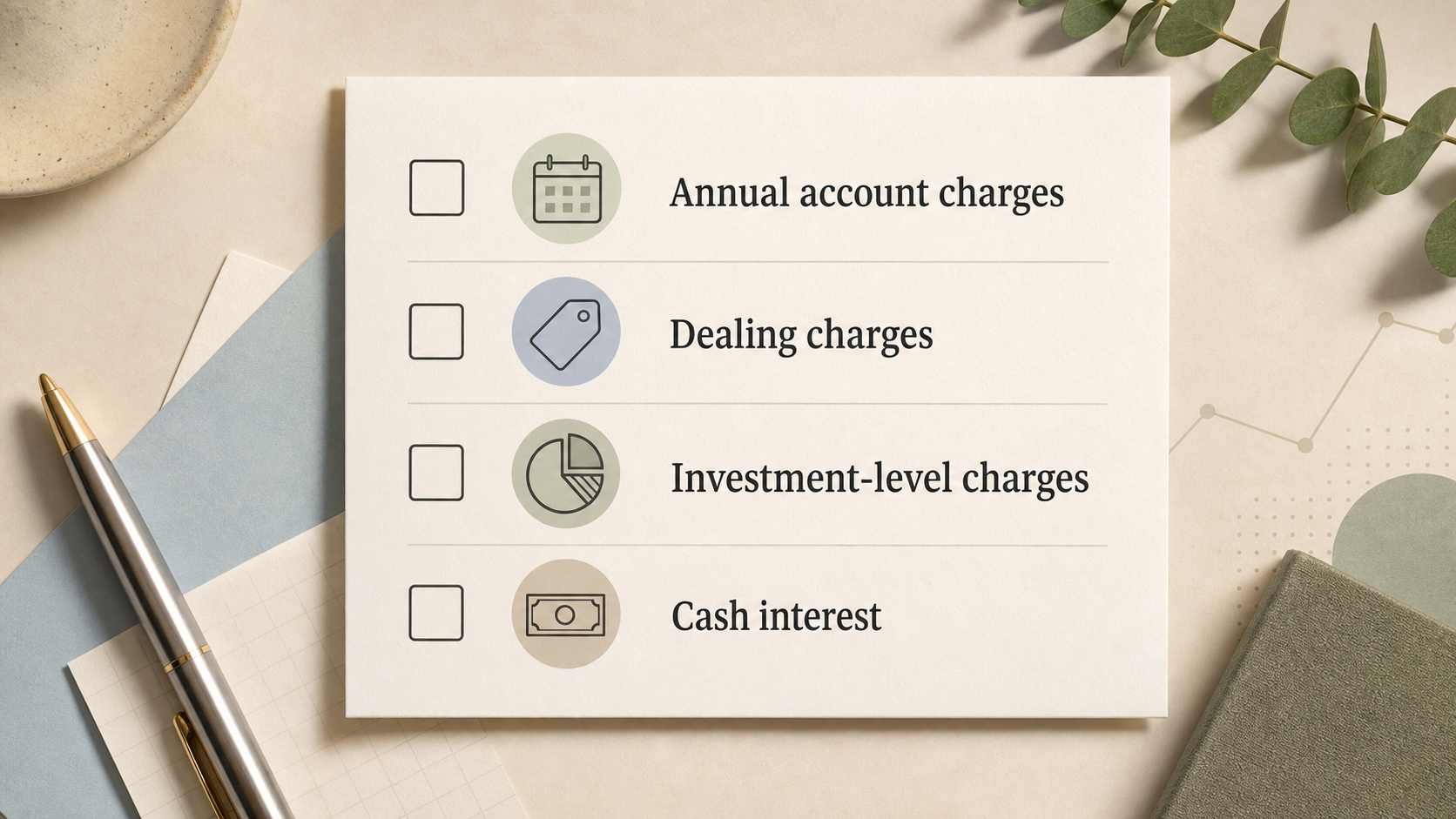 A useful comparison starts by separating costs that can otherwise be grouped together. HL’s Fund and Share Account page identifies three core categories: the account charge, dealing charges, and charges set by an investment’s fund manager or provider. Looking at each category separately can make it easier to compare services with different charging structures.
First, the account charge is described as an annual charge based on a percentage of the value of investments and billed monthly. The supplied page says that charges for funds are tiered. It also presents an account-charge schedule for shares and other equities, including exchange-traded funds, investment trusts, bonds, gilts and venture capital trusts. Rather than relying on a summary, check the current official schedule for the investments and account value relevant to you.
Second, dealing charges are the costs paid when buying or selling an investment. Their importance depends on how often you trade and what you buy. The official page distinguishes regular monthly fund investing by Direct Debit from one-off fund trades: it states that monthly regular investing has no dealing charge, while one-off transactions are listed separately in the dealing-charge schedule. That distinction can materially affect a comparison between a regular investing routine and an occasional trading routine.
Third, investment-level charges sit alongside the platform’s own fees. HL says some investments have charges set by the fund manager or provider, and that these can be found in the relevant key investor information document. A low-looking platform charge does not, by itself, show the total ongoing cost of owning a fund or other investment.
The same official information says it is free to hold uninvested cash in the Fund and Share Account and that uninvested money earns interest. Interest arrangements and account terms can change, so confirm the current details before treating cash as part of a platform comparison.
Before opening an account, make a short cost checklist:
- The annual account charge and the value bands that apply to your holdings.
- Dealing charges for the transactions you expect to make.
- Whether you will use regular monthly investing or one-off trades.
- Charges within each fund or investment, using its investor documentation.
- The treatment of uninvested cash, including current interest terms.
- Any transfer, exit or other account-specific costs that may apply to your circumstances.
This approach does not predict which platform will cost least. It helps ensure that the figures being compared cover the same activities and investments. See our investment platform fees guide and fund investing costs guide for additional context.
Practical Use and Investing Routine
The day-to-day mechanics of an account can be as important as its charge schedule. HL states that it is free to set up a Direct Debit for regular investing through its Stocks and Shares ISA and that no dealing charges apply to that regular investing route. Its Fund and Share Account pricing page makes a similar statement for monthly Direct Debit investing. The practical relevance is straightforward: investors who contribute on a routine may want to compare that route separately from investors who expect to place irregular one-off trades.
The supplied pages also describe a choice between selecting investments yourself and using ready-made options. Neither route is automatically suitable for every investor. If you choose investments yourself, consider the time you can commit to research, diversification and ongoing decisions. If you consider ready-made options, examine the underlying holdings, risk profile, charges and the role the option would play in your wider finances.
HL says customers can hold uninvested cash in a Fund and Share Account without a holding charge, and that the cash earns interest. Cash can be operationally useful while you decide how to invest or between transactions, but the relevant account terms and current interest details should be checked directly. It is also worth remembering that an investment’s own charges may still apply once money is invested.
A clear routine can make platform comparisons more useful. Note how frequently you plan to contribute, whether you expect to buy funds or other investments, how often you may sell, and whether you need to transfer an existing ISA. Then use the official charge schedule and product documents to test that routine against the available account terms.
Read more about regular investing and choosing investments.
Who Should Consider It and What to Verify
This review may be relevant to UK investors who want to compare a self-directed investment account with other platform options and are prepared to examine the terms themselves. It is not a personal recommendation. A platform can provide account tools and investment choices, but it cannot remove the need to decide whether investing, a particular account type or a chosen investment matches your circumstances.
Start with your investing horizon. HL’s ISA page says investing for five years or more increases the chance of positive returns compared with cash savings, while also warning that investments can fall in value and you could get back less than you invest. If you may need the money sooner, or would find losses difficult to accept, pause before assuming an investment account is appropriate.
Then consider your tax circumstances. The provider says tax benefits depend on individual circumstances and rules can change. Check current rules and consider professional advice where needed, particularly before making a decision based mainly on tax treatment.
If you are transferring an ISA, review potential loss of benefits or guarantees and any exit fees before starting. If you are opening a new account, focus on the total cost of your likely routine: account charges, dealing charges, investment-level charges and cash terms. Also check whether monthly Direct Debit investing or one-off transactions better reflect how you intend to invest.
The final decision should reflect your goals, ability to take risk, investing timescale and the practical work you are willing to do. Our investment risk guide and guide to choosing an investment platform can help structure those checks.
Primary CTA: Review the current official Hargreaves Lansdown account terms and charge schedule before opening or transferring an account.
Frequently Asked Questions
Does Hargreaves Lansdown charge for regular monthly investing?
According to the supplied HL ISA page, it is free to set up a Direct Debit for regular investing and no dealing charges apply to that route. The supplied Fund and Share Account pricing page also says there are no dealing charges when investing by monthly Direct Debit. Check the current official terms and the investment you plan to buy, because investment-level charges may still apply.
What fees should I check before opening a Fund and Share Account?
Review the annual account charge, which HL describes as percentage-based, tiered for funds and billed monthly. Also check dealing charges for the transactions you expect to make and any charges set by the fund manager or investment provider. HL says those investment-level charges can be found in the relevant key investor information document. If you expect to retain cash, verify the current cash-interest and account terms too.
What should I check before transferring an ISA to Hargreaves Lansdown?
HL says to check for lost benefits, guarantees and exit fees before transferring. You should also confirm what assets are being transferred, understand the current terms of the account you are leaving, and consider whether the new account’s charges and investing routine work for you. Tax treatment depends on individual circumstances and rules can change.
Is this review personal financial advice?
No. This article summarises account features, charge categories and cautions disclosed in the supplied official sources. It does not assess your financial circumstances or recommend an investment, account or transfer decision. If you need advice tailored to your situation, seek appropriately qualified help.
Sources
Related reading
- Best UK investment platforms: compare fees, account range and service models
- AJ Bell vs Hargreaves Lansdown: comparing fees, account range and service models
- AJ Bell Review: Fees, Account Options, Strengths, Limitations and Alternatives
- How Investment Platform Fees Work Across Funds, Shares, ETFs and Foreign Exchange
Editorial information: About our editorial team · Read our editorial policy · Read our affiliate disclosure.